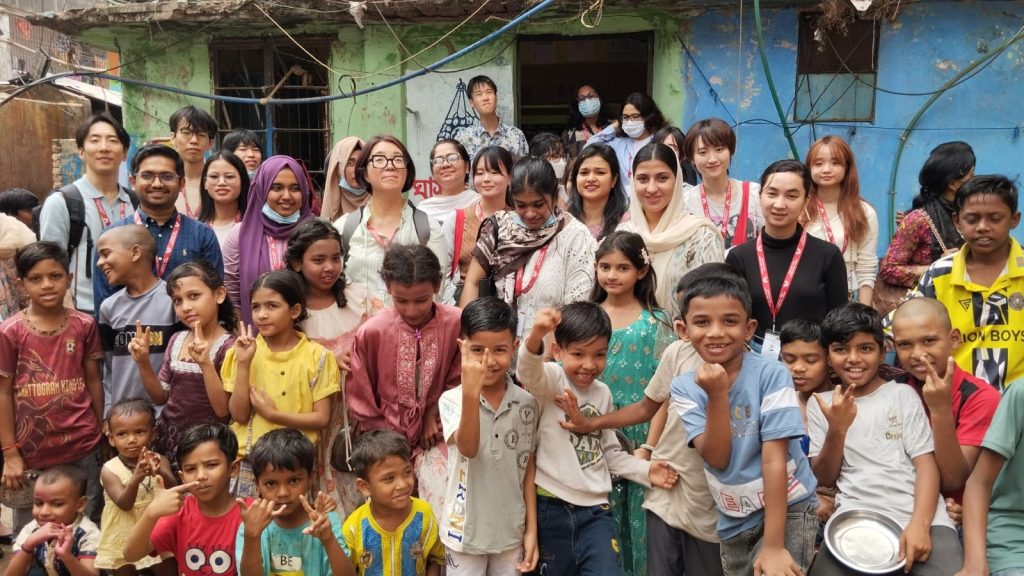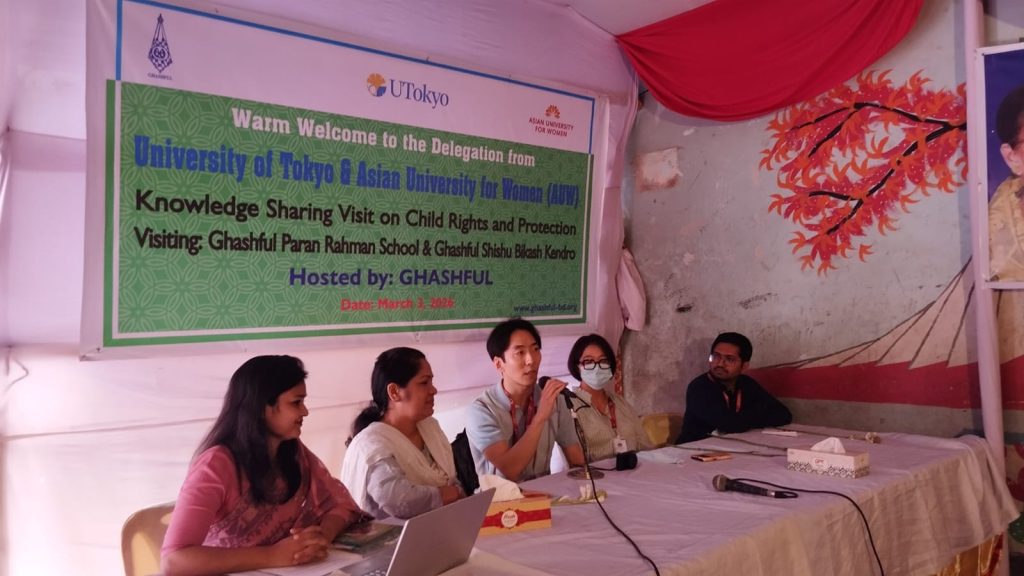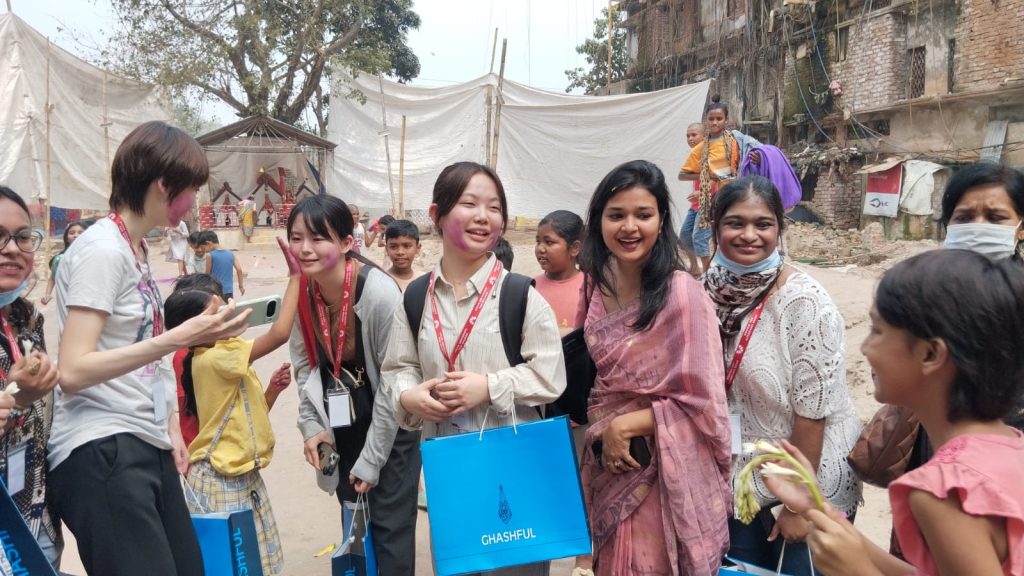

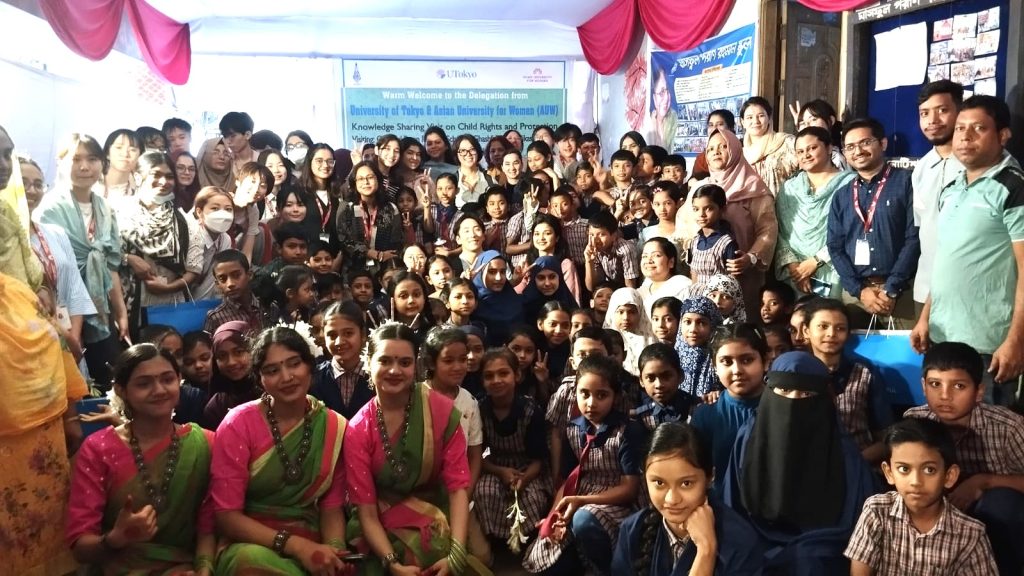
A delegation of nearly 40 faculty members and students from the University of Tokyo and the Asian University for Women visited Ghashful’s education initiatives on 3rd February for a knowledge sharing visit on child rights and protection.
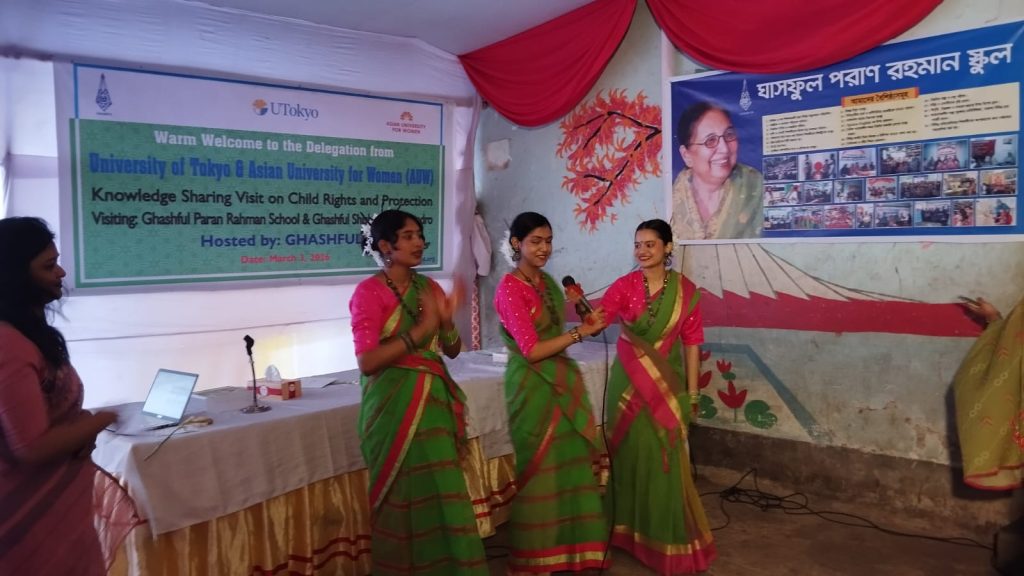
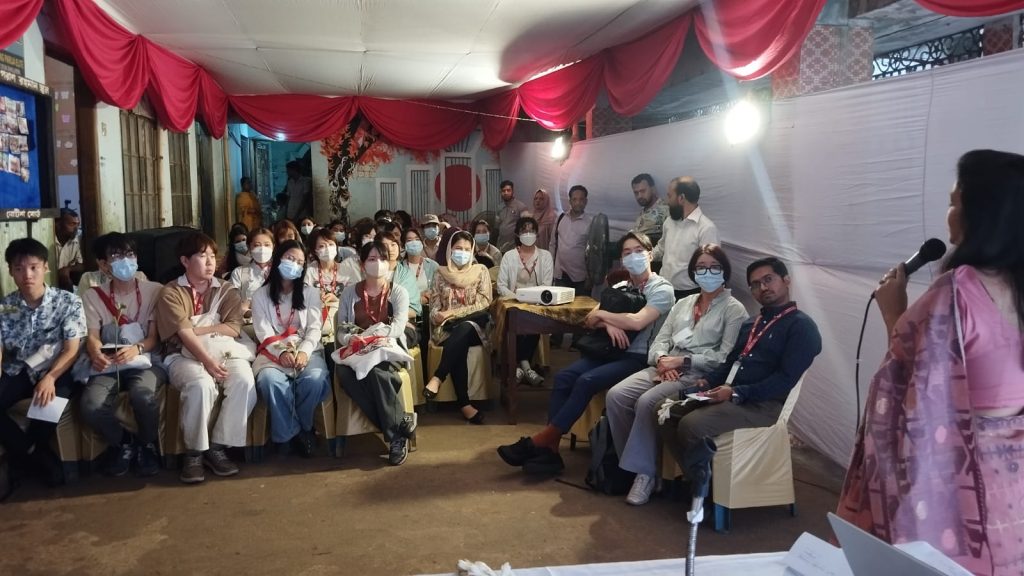
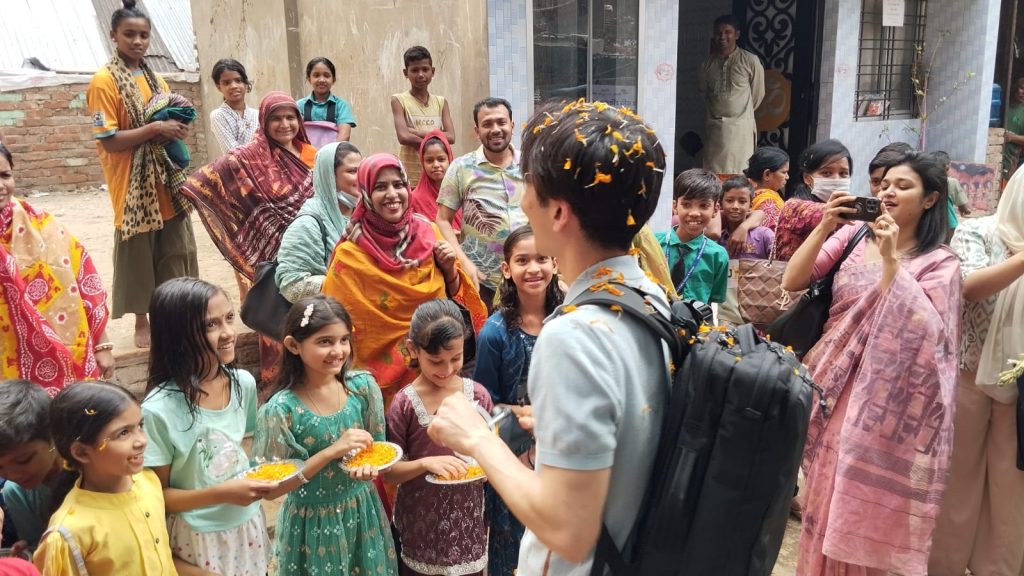
The delegation visited the Ghashful Paran Rahman School and the Ghashful Child Development Center in West Madarbari, Chattogram. Students warmly welcomed the guests with a colorful reception and floral greetings. During the program, Sadia Rahman, Deputy Director (Admin and HR) of Ghashful, delivered a digital presentation highlighting the organization’s history, core programs, and long standing contributions to education, nutrition, healthcare, and child protection for disadvantaged children.
The visiting delegation engaged in discussions on child rights, protection, education, and holistic child development. They also enjoyed cultural performances by students of Paran Rahman School before visiting Ghashful’s education and community health programs and interacting with beneficiaries.
Later, the delegation visited the Ghashful Sishu Bikash Center at Sebok Colony in East Madarbari, where they observed learning and creative development activities and enjoyed recitations, songs, and dances performed by the children.
Sadia Rahman emphasized the importance of collaboration in creating safe and inclusive environments for children, noting that Ghashful has been working toward this goal for more than five decades.
Members of the delegation, including representatives from both universities, highly appreciated Ghashful’s initiatives and expressed interest in strengthening future collaboration through continued knowledge exchange.
Distinguished participants included Topu Chowdhury and Dr. Ayon Saha from the Asian University for Women, and Professor Dr. Mari Yoshihara and Dr. Sho Shimoyamada from the University of Tokyo.
They conveyed sincere appreciation to Ghashful for its dedicated efforts, noting that the organization successfully delivers quality education and creative development opportunities to children from middle- and lower-middle-income families while also serving marginalized and Dalit communities with exceptional commitment.