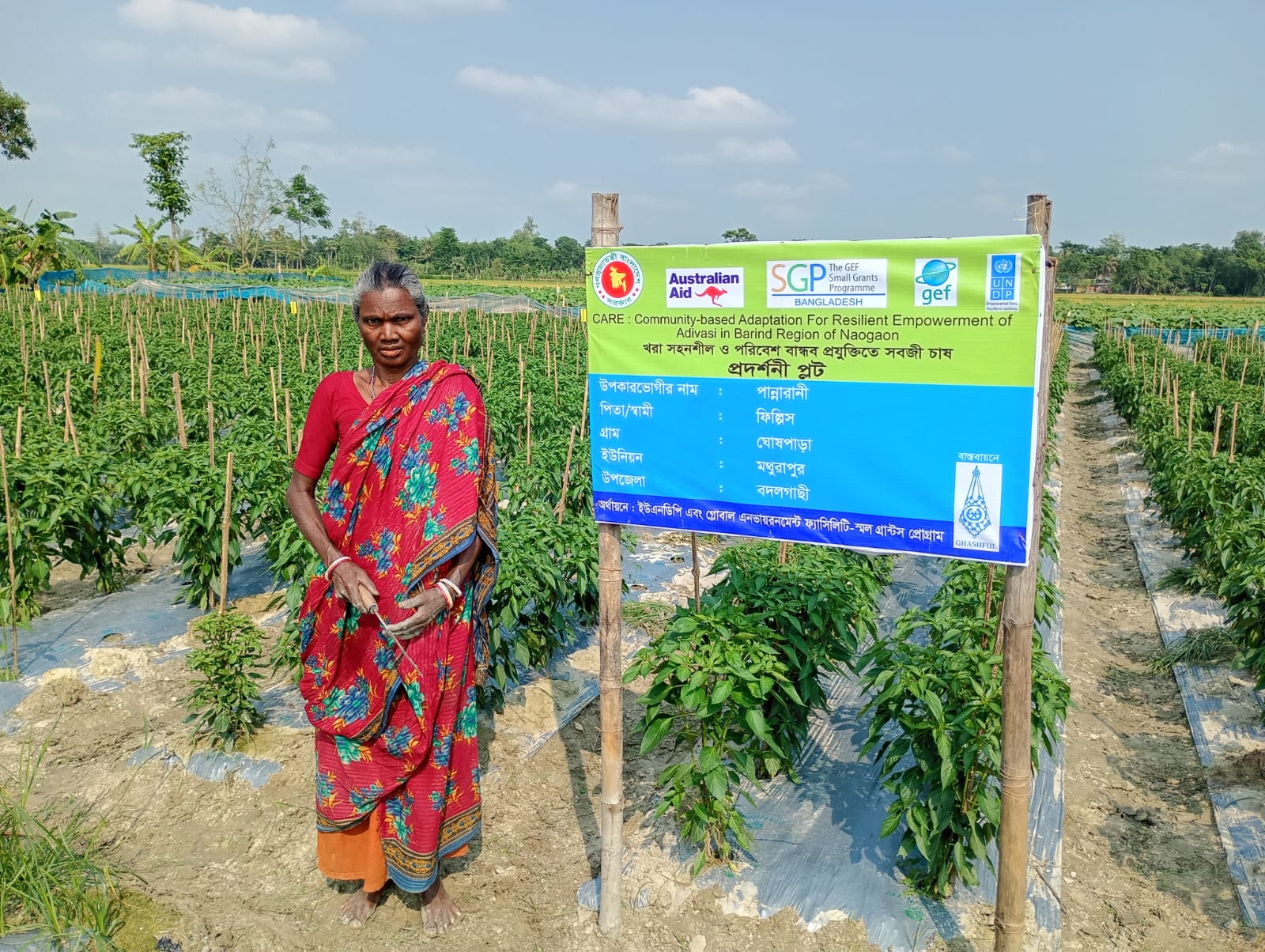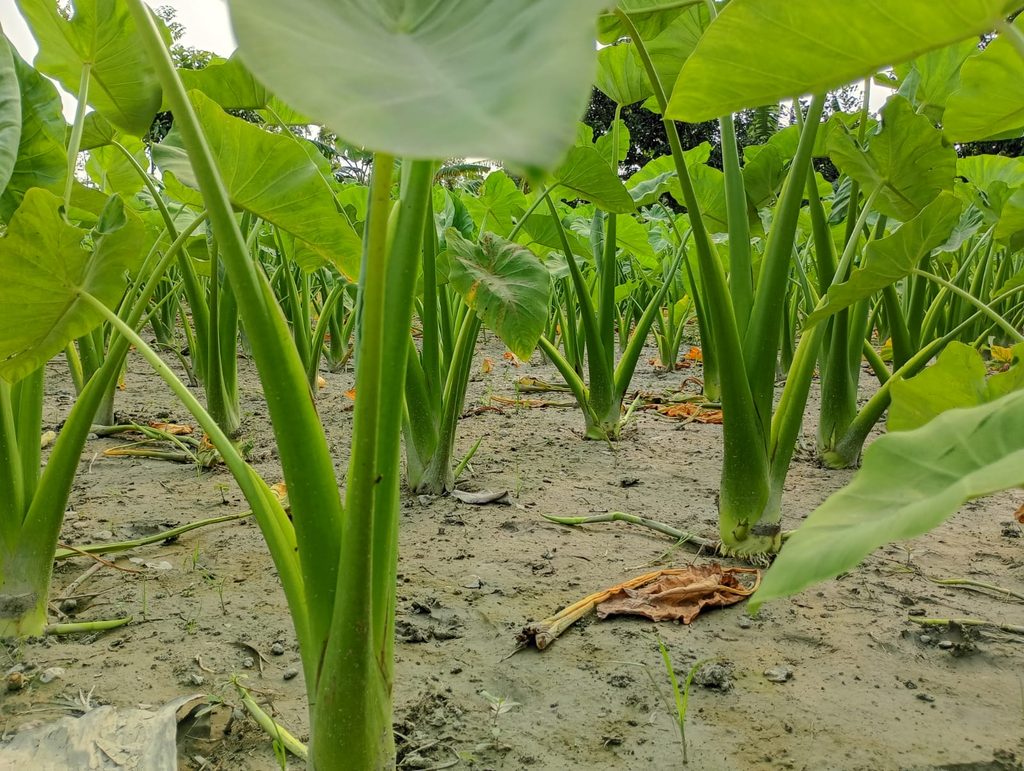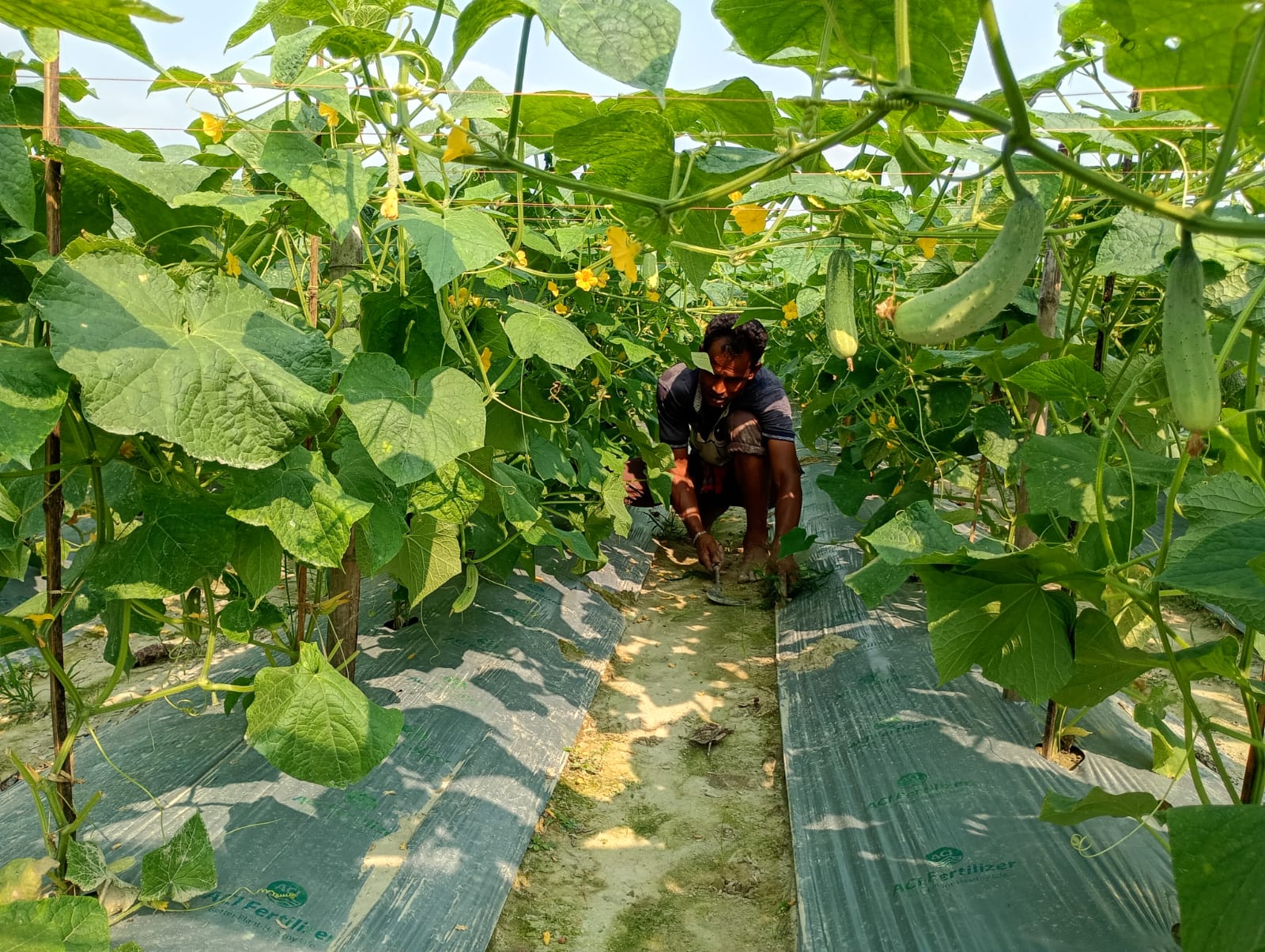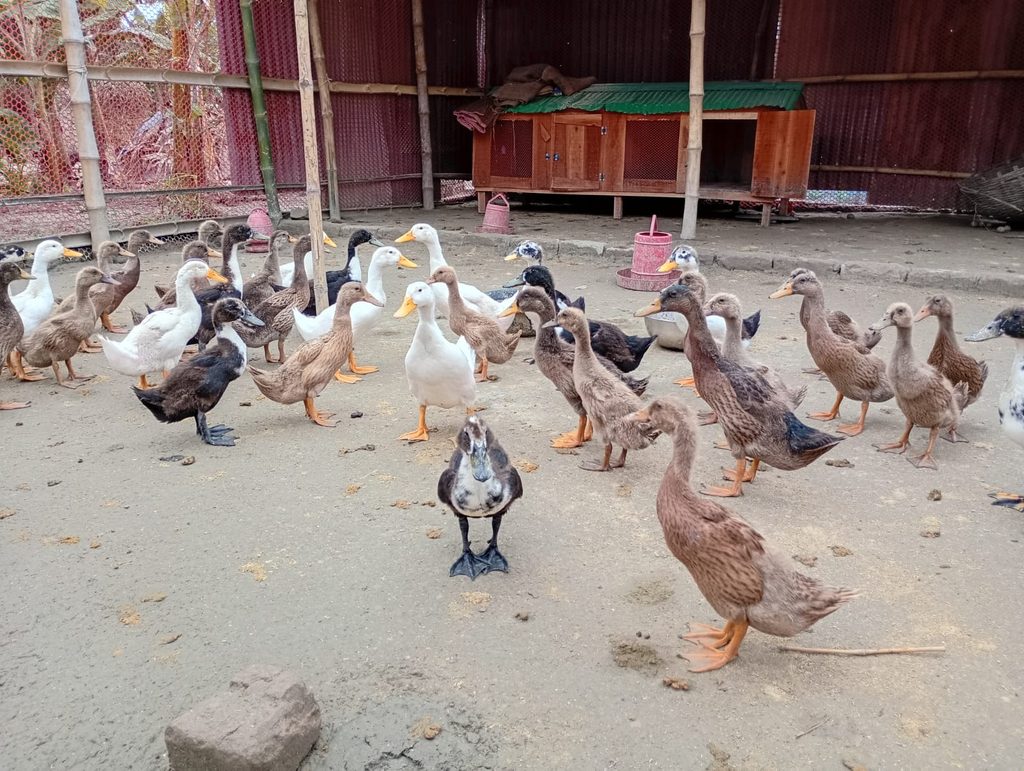

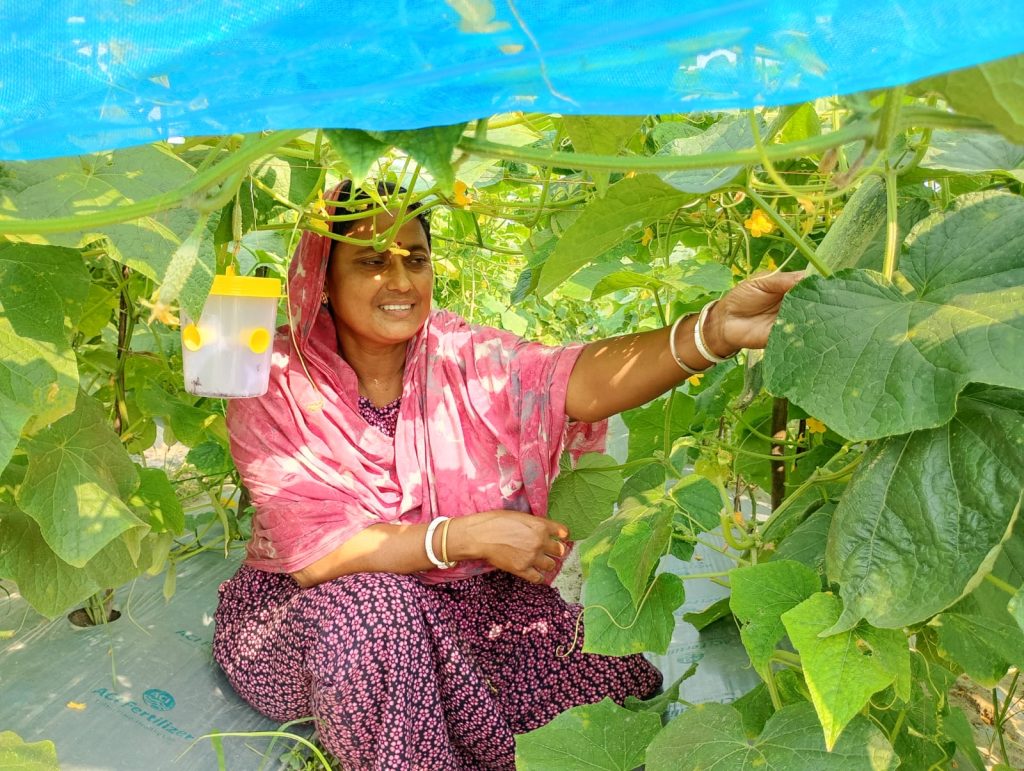
Under the Ghashful CARE (Community-based Adaptation for Resilient Empowerment of Adivasi in Barind region) Project, a quiet yet powerful story is gradually unfolding on the soil of Badalgachhi in Naogaon. It is not just a story of crops, or of poultry and vegetables. It is a story of survival, transformation, and the silent determination of people striving to stand on their own feet.
Bangladesh is a land of striking contrasts. It has rivers, yet faces drought; it has rainfall, yet lives with uncertainty. And at the margins are communities—indigenous people, smallholder farmers, and day laborers—whose lives are increasingly vulnerable to the impacts of climate change. Drought, erratic rainfall, and crop losses form a recurring cycle. In response, the United Nations Development Programme has long emphasized building local adaptive capacity, recognizing that resilience ultimately lies within communities themselves.
In this context, a quiet transformation is underway in Badalgachhi Sadar and Mathurapur unions through the Ghashful CARE Project, implemented by Ghashful with support from the United Nations Development Programme (UNDP), the GEF Small Grants Programme, and Australian Aid. The initiative is gradually opening new pathways of possibility for local people.
The first changes are visible in the soil. New techniques such as mulching paper, yellow sticky traps, and pheromone traps are being introduced. At first glance, these may seem like small changes. Yet they are powerful—reducing weeds, conserving water, and minimizing pest attacks. Farmers are beginning to realize that working with nature, rather than against it, is the key to sustainable farming.
With this realization comes confidence. A quiet but transformative belief emerges—“I can do this.” And this sense of self-belief becomes the foundation of change.
Beside the vegetable fields, another transformation is visible—flocks of dual-purpose ducks, providing both meat and eggs. But the real value lies beyond production. As farmers learn how such small initiative can reshape their household economy, they begin to think differently—planning, calculating, and growing into small entrepreneurs.
This is the true strength of the project—it does not create dependency; it builds capacity. It does not merely give; it teaches people how to grow, adapt, and thrive.